
80 km is a real milestone. Beyond a casual ride, but short of the mythical 100 km, it's the distance that transforms a weekend cyclist into a seasoned rider. Three to four hours in the saddle, technical sections, fatigue setting in, and nutrition becoming crucial. The good news is that with 4 to 6 weeks of structured preparation and the right nutritional strategy, this milestone is well within reach. Here's how to go from «I hope I can make it» to «I did it, and I'll do it again.».
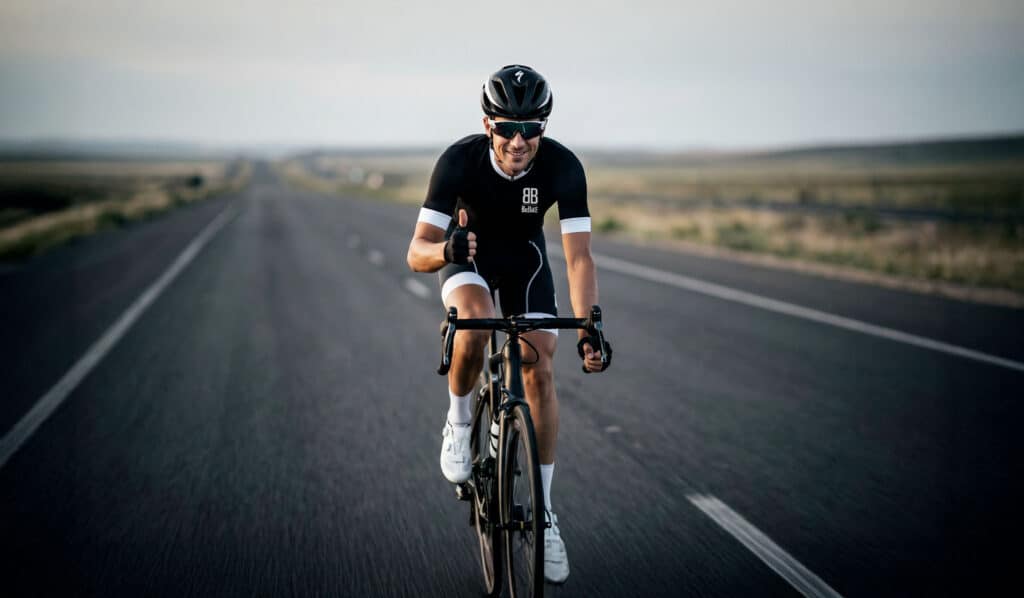
Why 80 km is a real milestone (and not just 30 km more)
The transition from 50 to 80 km crosses two important physiological thresholds: the effort duration exceeds 2 hours and 30 minutes (the point at which muscle glycogen stores begin to seriously deplete), and mental fatigue sets in. The practical consequence: it's no longer just «pedaling longer,» it's also «eating during the effort, managing your pace, and holding on mentally.» Three new skills to master together.
Assess your starting level honestly
Before aiming for 50 miles (80 km), ask yourself: Have I comfortably completed a 25-30 mile (40-50 km) run before? If yes, the jump is very achievable with preparation. If no, start by consolidating the 30-mile (50 km) distance before aiming for the next one. Gradual progression is key: avoid injury and maintain enjoyment.
The 4 to 6 weeks of physical preparation
Building equity in Zone 2
Zone 2 is the «conversation» pace: moderate effort, the ability to speak in complete sentences, heart rate around 65–75% of maximum heart rate. This is the foundation of endurance. 70 to 80% of your weekly training volume should be done at this intensity. Counterintuitive but proven: riding slower, more often, prepares you much better for long distances than pushing yourself to the limit on every ride.
Weekly Progress (the +10 % rule)
The golden rule: never increase your weekly mileage by more than 10% to 30%. This is the best way to prevent injuries. If you’ve ridden a total of 80 km this week, aim for 88 km next week—not 120 km.
The role of a 60-65 km test flight
Do a «test» outing of 60-65 km at the exact pace and with the exact nutritional strategy you will use on D-day. This is your laboratory: if something goes wrong (stool, gel that doesn't sit well, insufficient hydration).
The gear: what really makes a difference on long-distance runs
Bike settings (saddle, handlebars, cleats)
Over 30 km, a saddle that’s a little too high is uncomfortable. Over 80 km, it can lead to a strained tendon. A professional posture assessment covers 90% of potential issues. Saddle height, seat tube angle, handlebar position, and cleat alignment determine your long-term comfort and help prevent injuries.
High-quality padded shorts + anti-chafing cream
The right pair of cycling shorts is the must-have item you need to take your riding to the next level. A well-made chamois (with the right density and fit) makes all the difference. Pair it with an anti-chafing cream applied to your skin (not on the shorts): a must for rides longer than 2 hours.
Clothing according to weather (3-layer system)
Over 80 km, the weather has time to change. The 3-layer system (technical base layer, jersey, compressible windbreaker in the back pocket) covers 80% of situations. Gloves, sunglasses, a cap under the helmet for summer, or a neck gaiter for cooler weather.
Minimum repair kit
- 2 inner tubes (not one, two, the second puncture happens more often than you think).
- Tire changer.
- Compact multi-tool (Allen keys + Torx 25 wrench).
- Mini-pump or CO2 cartridges + head.
- ID card + charged phone.
Dashboard, navigation, lighting
A GPS device (Garmin, Wahoo, or a smartphone mounted on the stem with Komoot) will help you avoid detours and stress. If you leave early or return late: front and rear lights are required in low-visibility conditions.
Nutrition: The Real Key to a Successful 80km Ride
Over 80 km, nutrition makes the difference between a great day and the infamous «bonk» that saps your strength at km 60. The simple rule: 60 to 90g of carbohydrates per hour during exercise, and 500 to 750 ml of water per hour (more if hot).

Carb loading the day before, without overdoing it
No need for a marathon-worthy «pasta party»: a slightly richer meal with carbohydrates (pasta, rice, potatoes), a light protein, and low fiber is sufficient. Avoid alcohol, spicy dishes, and unusual foods. Stay hydrated regularly the day before.
Breakfast 3 hours before (the winning combo)
3 hours before departure, eat a digestible carbohydrate breakfast: white bread + jam + a little butter, or oatmeal + honey + banana, or dedicated products like Sweet Bar Santa Madre (oatmeal, gluten-free) perfect for sensitive stomachs. Coffee or tea as you usually have it, but nothing new on the big day.
During exercise: aim for 60 to 90 g of carbohydrates per hour
This is where it's decided. Concretely, this translates to 1 energy gel every 30-45 minutes, or 1 gel + 1 bar per hour. The brand Holy Mother, BeBike is an official dealer in Luxembourg and offers a particularly suitable range:
- 30CHO Gel (30 g carbohydrates, with or without caffeine version): rapid refueling every 30-40 min, perfect for the first few hours.
- Unusual Gel 45CHO (1:1 glucose/fructose ratio): to space out intake every 45 minutes during the second half of the outing.
- Unusual Gel 60CHO (1:0.8 ratio): high density, up to 80 minutes of energy per gel, for output or peak effort.
- Jelly Bar (37 g carbohydrates): textured alternative to gel, «No Cramps» version with anti-cramp electrolytes.

Hydration and electrolytes
A can of pure water and a can of Santa Madre Electrolyte Isotonic Drink (sodium, potassium, magnesium). Over 80 km, you lose 1.5 to 3 liters of water (more in heat). Plain water is not enough; you also need to replenish electrolytes to avoid cramps.
The «I'm not hungry» trap: eating before you feel hungry
Post-release recovery within the 30-minute window
Within 30 minutes of arriving, your body absorbs carbohydrates and proteins 2 to 3 times better: this is the «metabolic window.» Take advantage of it with a dedicated recovery product: the Santa Madre Recovery Drink (optimized carbohydrate/protein ratio) is designed for exactly that moment.
The mindset: going from «I hope I can do it» to «I did it»
Cut the output into 20 km segments
80 km is intimidating. 4 sections of 20 km is manageable. Focus on the next landmark (village, summit, fork in the road), not on the whole distance. This technique, proven in ultra-distance, also works for a first 80 km.
Manage the collapse in energy from km 55-65.
Statistically, this is where many first-timers crack: legs feel heavy, spirits drop. Three remedies: a gel + a sip of water, a 3-minute break to stretch and breathe, and the mental notion that there are «only 20 km left,» which is short.
Ride together or solo?
For your first 80-km ride, riding with someone experienced is a big plus: the pace settles naturally, and your morale stays higher. Avoid very mixed-ability groups: drafting behind a cyclist who’s 20% faster always ends badly.
D-Day: Checklist and Schedule
The day before
- Bike cleaned, tires inflated, drivetrain lubricated. If in doubt, bring it to the workshop.
- Back pockets prepared: gels, bars, repair kit, phone, ID card.
- Outfits ready + anti-chafing cream, nutrition, and bottles ready.
- Light carbohydrate meal, 8 hours of sleep minimum.
Initially
- Warm-up 10 easy minutes.
- Pace for the first 10 km: a notch below your usual pace. The secret to a successful long run.
Pendant
- Hourly reminders: gel every 30-45 min, sip every 10-15 min.
- Short pause technique (5 min) every 25-30 km: stretch, refill water bottles, eat a solid food.
upon arrival
- Light stretches (5-10 min).
- Recharge within 30 minutes: Recovery drink + balanced meal within an hour.
- Shower, rest. You did it.
💡 What we wish we knew before our first 80 km
- Start slower than you think you need to: your «you» at mile 40 will thank you.
- Eat before you're hungry. Always. A phone alarm every 30 minutes, without shame.
- Test your nutrition during training, not on race day. A poorly tolerated gel discovered at kilometer 50 is hell.
- Don't underestimate the weather: a compressible windbreaker weighs 100g and saves your outing ten times over.
Three "First 80 km" races in Luxembourg
- Moselle Loop (Schengen → Wasserbillig → return by bike or train): ~80 km, flat, vineyards.
- Alzette Valley Loop + Seven Castles : ~85 km, moderately hilly, castles.
- Mullerthal Trail (Echternach and return via PC2): ~80 km, hillier, spectacular landscapes.
For customized suggestions, ask our Recommended routes in Luxembourg.
Our nutritional selection at BeBike
We have selected Holy Mother because the brand checks all the boxes we look for in premium sports nutrition: advanced carbohydrate ratios (1:0.8 and 1:1), gluten-free, lactose-free, and palm oil-free formulas, 100% vegan, and a comprehensive range covering pre-workout, during exercise, hydration, and recovery. BeBike is the only official Santa Madre dealer in the Grand Duchy of Luxembourg, Visit the store to discover the range, ask for advice, or test it before its release. Also discover our Road and gravel bike catalog to cross this hurdle in the best possible way.
🎯 Pack endurance Santa Madre
A complete «turnkey» kit (gels + iso drink + recovery) to take with you on race day. Available at BeBike stores. Contact Us to reserve it.
FAQ
How many gels should you take for 80 km?
On average: 3 to 5 gels depending on intensity, supplemented by 1 or 2 bars and 2 to 3 bottles (water + isotonic). Adjust according to your weight, speed, and weather.
Do you need a license to drive 80 km alone?
No, no license is required for personal use. However, a club license is mandatory for federal races.
What if I can't do it?
No problem: you've planned a loop or a train return point (CFL). The only failure is getting injured. Listen to your body, and try again 2 weeks later with adjustments.